
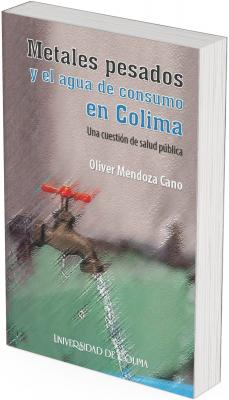
Metales pesados y el agua de consumo en Colima: Una cuestión de salud pública
Palabras clave:
aguas subterráneas, Colima, Metales pesados, México , salud ambientalSinopsis
En el presente libro se estudia la presencia de metales pesados en las aguas subterráneas del estado de Colima, México, y los hallazgos obtenidos de ella. También refiere el uso de nuevas técnicas con las cuales se puede cuantificar un coeficiente de riesgo y con ello poder justificar estudios de salud ambiental mucho más amplios por esa vía de exposición en la población.
Descargas
Referencias
Bellinger D.C., Bellinger M.A. Childhood lead poisoning: the torturous path from science to policy. J Clin Invest 2006; 116: 853-7. https://doi.org/10.1172/JCI28232
Bowen, H.J.M. (1979). Environmental chemistry of the elements. Academic Press, London.
Burns, G. W. (1976). The Science of Genetics An Introduction to Heredity. Third Edition. Collier MacMillan International Editions, USA.
Calderón J., Navarro M.E., Jiménez-Capdeville M.E., Santos-Díaz M.A., Golden A., Rodríguez-Leyva I., et al. Exposure to arsenic and lead and neuropsychological development in Mexican children. Environ Res 2001;85:69-76. https://doi.org/10.1006/enrs.2000.4106
Calderón-Salinas, V., B. Valdez-Anaya, M.A. Zúñiga Charles y A. Albores-Medina. 1996. Lead exposure in a population of Mexican children. Human Exp. Toxicol. 15: 305-310. https://doi.org/10.1177/096032719601500406
Cano. Ma. E. (Mayo 2007). Análisis de elementos residuales depositados en la mano después de disparar un arma de fuego usando espectroscopía de emisión óptica por plasma acoplado inductivamente (ICP-OES). México, D. F. Tesis, licenciatura. IPN. 46-68 pp.
Cervantes, C. y R. Moreno S. 1999. Contaminación ambiental por metales pesados. Impacto en los seres vivos. AGT Editor. México, D.F.
CNA-GEH. Gerencia Estatal en Hidalgo de la Comisión Nacional del Agua. 1998.
Costa L.G., Aschner M., Vitalone A., Syversen T., Soldin P.O. Developmental neuropathology of environmental agents. Annu Rev Pharmacol Toxicol 2004;44:87-110. https://doi.org/10.1146/annurev.pharmtox.44.101802.121424
Díaz-Barriga, F., M.A. Santos, J.J. Mejía, L. Batres, L. Yánez, L. Carrizales, E. Vera, L.M. del Razo y M.E. Cebrián. 1993.
Dong Z. The molecular mechanisms of arsenic-induced cell transformation and apoptosis. Environ Health Perspect 2002; 110 (Suppl. 5): 757-9. https://doi.org/10.1289/ehp.02110s5757
Environmental Protection Agency (EPA). Integrated Risk Information Systems (IRIS) on Arsenic. National Center for Environmental Assessment, Office of Research and Development Washington DC. 1999.
Ercal N., Gurer-Orhan H., Aykin-Burns N. Toxic metals and oxidative stress part I: Mechanisms involved in metal-induced oxidative damage. Curr Top Med Chem 2001; 1: 529-39. https://doi.org/10.2174/1568026013394831
Finkelman, J. 1990. Medio ambiente y salud en México, pp. 581-629. In: E. Leff (Compilador). Medio ambiente y desarrollo en México. Universidad Nacional Autónoma de México-Porrúa. México, D.F.
Flora S.J.S., Bhadauria T.S., Pant S.C., Dhaked R.K. Arsenic induced blood and brain oxidative stress and its response to some tiol chelators in rats. Life Sci 2005; 77: 2324-37. https://doi.org/10.1016/j.lfs.2005.04.016
Flora S.J.S., Mittal M, Mehta A. Heavy metal induced oxidative stress & its possible reversal by chelation therapy. Indian J Med Res 2008; 128: 501-23.
Flores J. (1992). Les métaux tóxiques das les eauxs pluviales en milieu urbain: Carasteristiques physico-chimiques. Tesis de doctorado, Universidad de Paris XII-Val de Marne, Francia, 229 p.
Foster Stephen; Hirata Ricardo; Gomes Daniel; D'Elia Monica; Paris Marta. Protección de la Calidad del Agua Subterránea. Editorial Banco Mundial. Segunda edición. Año 2007, 87-100 pp.
Francisco García Crespo J. (2009). Ámbito científico-tecnológico. Formación básica PCPI. EditeX.
Garza A., Chávez H., Vega R., Soto E. Mecanismos celulares y moleculares de la neurotoxicidad por plomo. Salud Mental 2005; 28: 48-58.
Ginzo Villamayor, María José (2015). Análisis geoestadístico. Datos funcionales. Tesis de maestría, Universidad de Santiago de Compostela.
Glynn, Heinke. (1999). Ingeniería ambiental. México. Prentice Hall. Goebel H.H., Schmidt P.F., Bohl J., Tettenborn B., Kramer G., Gutman L. Polyneuropathy due to acute arsenic intoxication; biopsy studies. J Neuropathol Exp Neurol 1990; 49: 137-49. https://doi.org/10.1097/00005072-199003000-00006
Gómez-Arroyo, S., M. Altamirano y R. Villalobos Pietrini. 1981. Goyer RA, Clarsksom WT.Toxic effects of metals. En: Klaassen CD editor. Casarett and Doull's Toxicology. The basic Science of poisons. New York: McGraw-Hill, 2001; 811-67.
González H.R., Casares S. R. y Rodríguez C. R. (2002). Riesgo a la salud por consumo de agua contaminada por lixiviados de SDFDS. Congreso Interamericano de Ingeniería Sanitaria y Ambiental. Cancún, México. pp. 5-6.
Goyer R.A. Lead Toxicity: current concerns. Environ Health Perspect. 1993; 100: 177-87. https://doi.org/10.1289/ehp.93100177
Greenberg S.A. Acute demyelinating polyneuropathy with arsenic ingestion. Muscle Nerve 1996; 19: 1611-3. https://doi.org/10.1002/(SICI)1097-4598(199612)19:12<1611::AID-MUS13>3.0.CO;2-U
Gwalteney-Brant S.M. Heavy Metals. En: Haschek W.M., Rosseaux C.G., Wallig A.M., editors. Handbook of Toxicologic Pathology. New York. Academic Press 2002: 701-32.
Hartwig A., Pelzer A., Asmuss M., Burkel A. Very low concentrations of arsenite suppress poly ADP-ribosylation in mammalian cells. International J Cancer 2003; 104: 1-6. https://doi.org/10.1002/ijc.10911
Hartwig, A. 1995. Current aspects in metal genotoxicity. BioMetals 8: 3-11. https://doi.org/10.1007/BF00156151
Hughes, M.K., N.W. Lepp y D.A. Phipps. 1980. Aerial heavy metal pollution and terrestrial ecosystems. Adv. Ecol. Res. 11: 218-227. https://doi.org/10.1016/S0065-2504(08)60268-8
Iqbal, M.Z. y F. Khalid (1998). Cadmium toxicity to some tree species In: City trees. J. Soc. Municipal Arborists 34-1. January-February. http://www. Urban-forestry.com/
J.O. Ramsay and B.W. Silverman. Functional Data Analysis. Statistics. Springer-Verlag, 2nd edition, 2005. Järup L. Hazards of heavy metal contamination. Brit Med Bull. 2003; 68: 167-82. https://doi.org/10.1093/bmb/ldg032
Jiménez, C. (1993). Factores de exposición ambiental y concentraciones de plomo en sangre en niños de la ciudad de México. Salud Pública 35-6. nov-dic, 1993. http: //www.Insp.mx/salud/35/356-95.html
Junco-Muñoz, P., R. Toman, J.H. Lee, S.A. Barton, F. Rivas y R.M. Cerda-Flores. 1996. Blood lead concentrations and associated factors in residents of Monterrey, Mexico. Arch. Med. Res. 27: 547-551.
Kakkar P., Jaffery N.F. Biological markers for metal toxicity. ETAP 2005; 19: 335-49. https://doi.org/10.1016/j.etap.2004.09.003
Kannan G.M., Tripathi N., Dube S.N., Gupta M., Flora S.J. Toxic effects of arsenic (III) on some hematopoietic and central nervous system variables in rats and guinea pigs. J. Toxicol Clin Toxicol 2001; 39: 675-82. https://doi.org/10.1081/CLT-100108508
Kemmer, F. N. y J. McCallion. 1999. Manual del agua. Su naturaleza y aplicaciones.
Loué, André (1998). Los microelementos en agricultura. Ed. Mundi. Prensa, Madrid, 1988.
Mendoza-Cano O., Sánchez-Piña R.A., Barrón-Quintana J., Cuevas-Arellano H.B., Escalante-Minakata P., Solano-Barajas R. Riesgos potenciales de salud por consumo de agua con arsénico en Colima, México. Salud Pública, México, 2017; 29: 34-40, https://doi.org/10.21149/8413
Ministerio de Sanidad y Consumo (1997). Directiva relativa a la a calidad de las aguas destinadas al consumo humano. Dirección General de Salud Pública. Subdirección General de Sanidad Ambiental. Boletín Oficial del Estado (BOE). España. 16.10.97.
Mitchell, N. (1998). Cadmium-toxicity of metal and compounds. 11 dic. 1998. http://www.Utoronto.Ca/env/lib_hold/db2/files/7231_TE.Htm
Nava-Ruiz C., Alcaraz-Zubeldia M., Méndez-Armenta M., Vergara P., Díaz-Ruíz A., Rios C. Nitric oxide synthase immunolocalization and expresión in the rat hippocampus after sub-acute lead acetate exposure in rats. Exp Toxicol Pathol 2010; 62: 311-6. https://doi.org/10.1016/j.etp.2009.04.006
Noel A. C. Cressie. Statistics for Spatial Data. Probability and Statistics. Wiley, 1993. NourEddine D., Miloud S., Abdelkader A. Effect of lead exposure on dopaminergic transmission in the rat brain. Toxicology 2005; 207: 363-8. https://doi.org/10.1016/j.tox.2004.10.016
Novotny, V. (1995): Diffuse sources of pollution by toxic metals and impact on receiving waters. In "Heavy Metals", W. Salomons, U. Förstner & P. Mader, eds. Springer-Verlag, Berlin, 33-52. https://doi.org/10.1007/978-3-642-79316-5_3
Oláiz, G., T. Fortoul, R. Rojas, M. Doyer, E. Palazuelos y C.R. Tapia. 1996. Risk factors of high level of lead in blood of schoolchildren in Mexico City. Arch. Environ. Health 51: 1-5. https://doi.org/10.1080/00039896.1996.9936004
Papanikolaou C.N., Hatzidaki G.E., Belivanis S., Tzanakakis G.N., Tsatsakis M.A. Lead toxicity update. A brief review. Med Sci Monit 2005;11: RA 329-36.
Parte II: Human health and ecosystem effects. Ed. John Wiley and Sons, Inc. Vol. 27, capítulo 9, 159-172.
PCPI Informática (2012). La hidrósfera. Recuperado de http://csepcpinfo.blogspot.mx/2012/11/la_hidrosfera.html.
Plant, J., Smith, D., Smith, B. & Williams, L. (2001): Environmental geochemistry at the global scale. Applied Geochemistry, 16, 1291-1308. https://doi.org/10.1016/S0883-2927(01)00036-1
Pielou, E.C. Fresh water. Chicago: University of Chicago Press, 1998.
Ramos, L.J.A. 1996. Parámetros estructurales que controlan la hidrodinámica de las aguas subterráneas en el área de Zimapán, Hidalgo. Tesis de maestría. Programa de Posgrado en Ciencias de la Tierra. Instituto de Geología. UNAM. México.
Reporte de análisis fisicoquímicos del agua en Zimapán, Hidalgo desde los años de 1992-1998 de la Subgerencia de Administración del Agua.
Ríos R., Zarazúa S., Santoyo M.E., Sepúlveda-Saavedra J., Romero-Díaz V., Jiménez V., et al. Decreased nitric oxide markers and morphological changes in the brain of arsenic-exposed rats. Toxicology 2009; 261: 68-75. https://doi.org/10.1016/j.tox.2009.04.055
Rodríguez V.M., Carrizales L., Jiménez-Capdeville M.E., Dufour L., Giordano M. The effects of sodium arsenite exposure on behavioral parameters in the rat. Brain Res Bull 2001;55:301-8. https://doi.org/10.1016/S0361-9230(01)00477-4
Rodríguez V.M., Jiménez-Capdeville M.E., Giordano M. The effects of arsenic exposure on the nervous system. Toxciol Lett 2003; 145: 1-18. https://doi.org/10.1016/S0378-4274(03)00262-5
Sanmiguel, S.M.F. García, S. J. Serrano, G.B. y G.M.A. Rivera. 2000. Resurgimiento del hidroarsencismo. Perfiles, Universidad Autónoma de Coahuila, México. 3-6.
Secretaría de Salud (1996). Norma Oficial Mexicana NOM-127-SSA1-1994. Salud ambiental. Agua para uso y consumo humano. Límites permisibles de calidad y tratamiento a que debe someterse el agua para su potabilización. Diario Oficial de la Federación, 18-01-96. México. Primera sección. 41-46.
Secretaría de Salud (2000). Norma Oficial Mexicana NOM_127_SSA1_1994. Salud ambiental. Agua para uso y consumo humano. Límites permisibles de calidad y tratamiento a que debe someterse el agua para su potabilización. Diario Oficial de la Federación. México. 22-11-00
Shields, P. y Harry, C.C.: Causas ambientales del cáncer. En Clínica Médicas de Norteamérica. Medicina ambiental, Vol 2: 273-288. Ed. Interamericana. México, 1990.
Shoental, R. (1975). Chromium carcinogenesis, formation of epoxyaldehydes and tanning. Br. J. Cancer 32: 403-404. https://doi.org/10.1038/bjc.1975.241
Sieguel, F.R. (2002). Enviromental geochemestryof potentially toxic metals. Springer. Sister-chromatid exchanges induced by som chromium compounds in human lymphocytes in vitro. Mutation Res. 90: 425-431. https://doi.org/10.1007/978-3-662-04739-2
Solís, V.B. y G.E. Morales, 1990. Diseño de una planta piloto para la remoción de arsénico del agua de pozos, mediante el proceso de coagulación-fluculación. Tesis de Licenciatura. Fac. Quím. UNAM, México. 1-17.
Soltaninejad K., Kebriaeezadeh A., Minaiee B., Ostad N.S., Hosseini R., Azizi E., et al. Biochemical and ultraestructral evidences for toxicity of lead through free radicals in rat brain. Hum Exp Toxicol 2003; 22: 417-23.
Struzynska L., Bubko I., Walski M., Rafalowska U. Astroglial reaction during the early phase of acute lead toxicity in the adult rat brain. Toxicology 2001; 165: 121-31. https://doi.org/10.1016/S0300-483X(01)00415-2
Thomas J.D., Styblo M., Lin S. The cellular metabolism and systemic toxicity of arsenic. Toxicol Appl Pharmacol 2001; 176: 127-44. https://doi.org/10.1006/taap.2001.9258
Tomo I. Ed. Me Graw-Hill/Interamericana. México, p. 6.1. Lianfang, W. y H. Jianzhong. 1994. Choronic arsenism from drinking wáter in some areas of Xinjiang, China. En: Nriagu, J. O. (Ed.). Arsenic in the environment.
Toscano C.D., Guilarte R.T. Lead neurotoxicity: from exposure to molecular effects. Brain Res Rev 2005; 49: 529-54. https://doi.org/10.1016/j.brainresrev.2005.02.004
Upton, C.A.: Medicina ambiental: introducción y panorama general, en Clínicas Médicas de Norteamérica. Medicina ambiental. Vol 2: 245-254, Interamericana, 1990.
Vahter M. Health effects of early life exposure to arsenic. Basic Clin Pharmacol Toxicol 2007; 102: 204-11. https://doi.org/10.1111/j.1742-7843.2007.00168.x
Valtueña J. (2002). Enciclopedia de la ecología y la salud. Madrid, España. Editorial Safeliz S. L.
Villeda-Hernández J., Barroso-Moguel R., Méndez-Armenta M., Nava-Ruiz C., Huerta-Romero R., Ríos C. Enhanced brain regional lipid peroxidation in developing rats exposed to low level lead acetate. Brain Res Bull 2001; 55: 247-51. https://doi.org/10.1016/S0361-9230(01)00512-3
WHO (World Health Organization) (1996). Guidelines for drinkingwater quality, 2a Ed. Vol. 2 Health criteria and other supporting information. Genova, World Health Organization.
Willis, D.P. (1998). Toxic exposures 29 septiembre 1998. http://www.texastriallawyer. com/ chromium_ toxicity/index.htm
Withe. R.P. Effcts of line upon soil an plant manganese levels in an acid soil. Sci Soc. Amer. Proc. 34, 34: 625-629, 1970. https://doi.org/10.2136/sssaj1970.03615995003400040025x
Woolf A., Wright R., Amarasiriwardena C., Bellinger D. A child with chronic manganese exposure from drinking water. Environ Health Perspect 2002; 110: 613-618. https://doi.org/10.1289/ehp.02110613
Zang T.L., Gao Y.X., Lu J.F., Wang K. Arsenite, arsenate and vanade affect human erythrocyte membrane. J Inorg Biochem 2000; 79: 195-203. https://doi.org/10.1016/S0162-0134(99)00155-5
Descargas
Publicado
Colección
Categorías
Licencia

Esta obra está bajo una licencia internacional Creative Commons Atribución-NoComercial-CompartirIgual 4.0.